
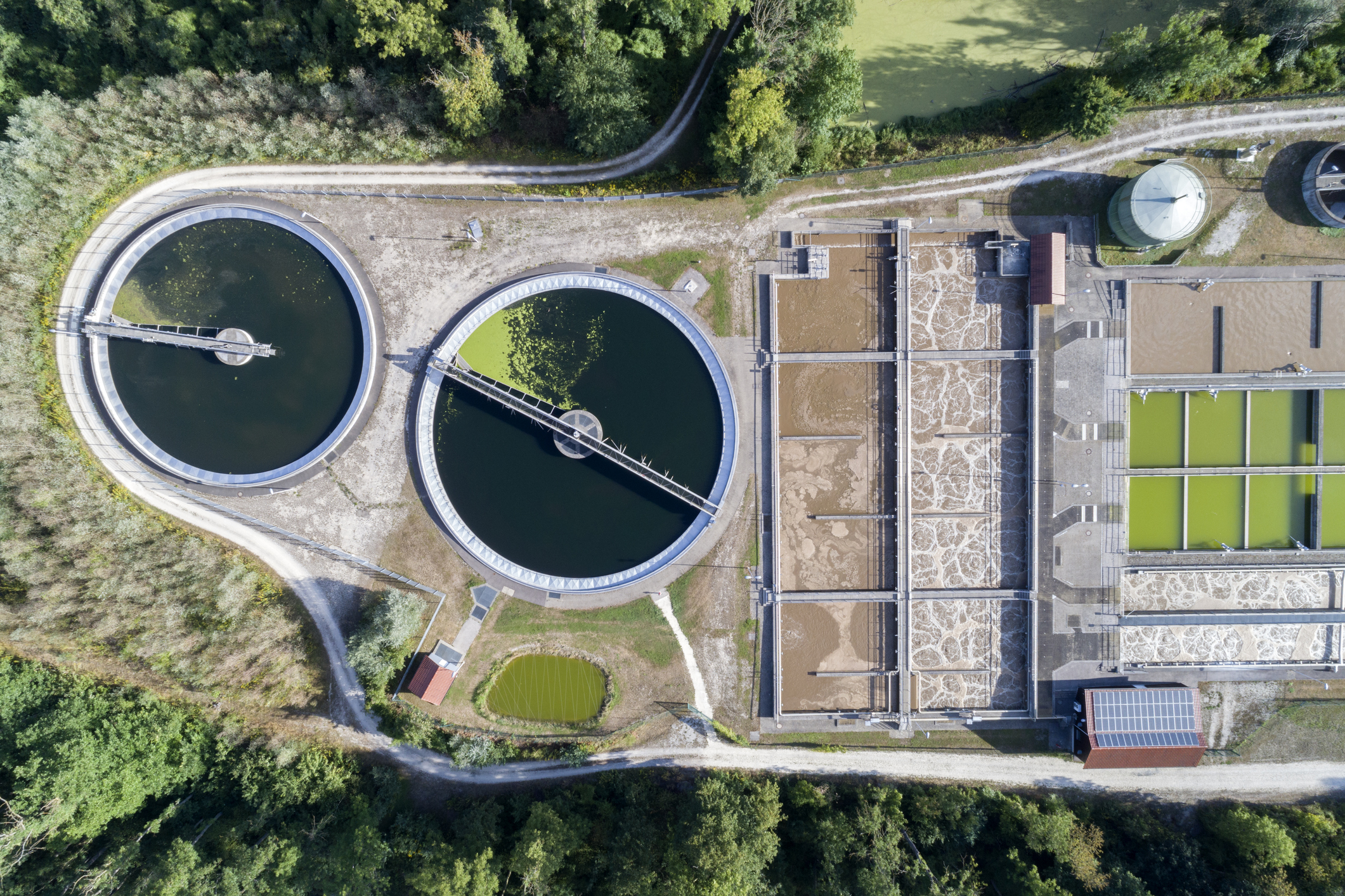
PotableWater Disinfection
Chlorinedioxide is commonly used in both pre-oxidation and post-disinfectionstages of potable water treatment:
- Pre-oxidation: Applied early in the treatment train, chlorine dioxide effectively controls taste and odour, oxidizes iron and manganese, and minimizes the formation of disinfection by-products (DBPs).
- Post-disinfection: Ensures microbiological safety at the final stage, reducing pathogens and maintaining residual protection throughout the distribution network.
WastewaterDisinfection
In treated wastewaterdisinfection, chlorine dioxide is used to reduce microbial load beforedischarge or reuse, offering effective performance across various effluentqualities and pH levels.
Key Advantages of Chlorine Dioxide
- Taste and Odour Control
ClO₂ selectively oxidizes taste- and odour-causing compounds without forming chlorinated DBPs, improving consumer satisfaction. - THM and HAA Control
Unlike chlorine, chlorine dioxide does not react with natural organic matter to form significant levels of trihalomethanes (THMs) or haloacetic acids (HAAs), helping utilities comply with regulatory limits. - Iron and Manganese Removal
The strong oxidative properties of chlorine dioxide make it highly effective in precipitating dissolved iron and manganese, which are common issues in groundwater sources. - Broad pH Effectiveness
Chlorine dioxide remains effective over a wide pH range, unlike chlorine, whose disinfection efficacy drops at higher pH values. This makes it applicable in diverse water sources with minimal pre-treatment adjustment. - Low Concentration, High Efficacy
ClO₂ achieves disinfection goals at very low concentrations, reducing chemical usage and operational costs while maintaining safety. - Residual Maintenance
Chlorine dioxide forms stable residuals that are easier to maintain during water transport, ensuring disinfection across the distribution network without the formation of unwanted by-products. - Biofilm Control
A significant advantage of chlorine dioxide is its ability to penetrate and kill microorganisms within biofilms. This reduces microbial regrowth and minimizes health risks associated with biofilm formation in pipelines.
Conclusion
Chlorine dioxide presents a comprehensive solution for municipal watertreatment, addressing both regulatory compliance and operationalchallenges. Its ability to control odour, minimize by-products, and maintainresiduals while being effective at low dosages makes it a valuable tool formodern water treatment facilities. Whether applied to potable water orwastewater, chlorine dioxide ensures safe, clean water delivery while enhancingsystem reliability and public health protection.

%20(1)%20(1).jpg)
%20(1).jpg)


%20(2).jpg)

.jpg)
